
The 2026 Peking University Workshop on Hydrogen and Helium Geology was held at the Peking University Science and Technology Building on September 17, 2026. Hosted by the Institute of Energy, Peking University the workshop was convened by Zhijun Jin and Quanyou Liu. More than 50 scholars and graduate students attended from Stanford University, Imperial College London, Peking University, the Guangzhou Institute of Geochemistry of the Chinese Academy of Sciences, the Northwest Institute of Eco-Environment and Resources of the Chinese Academy of Sciences, the Center for High Pressure Science and Technology Advanced Research, the Research Institute of Petroleum Exploration and Development of China National Petroleum Corporation, the Petroleum Exploration and Production Research Institute of Sinopec, the Institute of Earthquake Forecasting of the China Earthquake Administration, China University of Geosciences (Beijing), China University of Petroleum (Beijing), and China University of Mining and Technology (Beijing).
Quanyou Liu of the Institute of Energy, Peking University chaired the workshop. He opened the event by introducing its background, the invited participants, and the meeting agenda. Zhijun Jin, Director of the Institute, presented welcoming remarks by greeting the participating scholars, and provided a general introduction of the Institute's research activities.
The technical sessions covered a broad range of topics in hydrogen and helium geoscience. Geoffrey S. Ellis of Stanford University reviewed international advances in research on the genetic mechanisms, exploration approaches, and resource assessment of natural hydrogen. Independent scholar Anran Cheng compared the origins and accumulation characteristics of hydrogen and helium and discussed the mechanisms governing the co-accumulation of hydrogen, helium, and nitrogen in sedimentary basins. Yunpeng Wang of the Guangzhou Institute of Geochemistry, Chinese Academy of Sciences, presented experimental results on hydrogen generation through the pyrolysis of organic matter-rich rocks and discussed their geological implications. Renbiao Tao of the Center for High Pressure Science and Technology Advanced Research addressed H2O-CO2 cycling in subduction-zone settings and their links to the formation of abiotic methane and hydrogen. Qingqiang Meng of the Petroleum Exploration and Production Research Institute of Sinopec presented a case study of natural hydrogen exploration in the Chuxiong Basin of southern China. Jiao Tian of the Institute of Earthquake Forecasting, China Earthquake Administration, discussed continuous monitoring of hot-spring gases and its application to earthquake forecasting in Tibet and the Sichuan-Yunnan region. Jingsong Wang of the Northwest Institute of Eco-Environment and Resources, Chinese Academy of Sciences, introduced helium diffusion in zircon and its quantification using molecular dynamics. Chengsheng Chen of the Guangzhou Institute of Geochemistry, Chinese Academy of Sciences, reported on the re-examination and genetic interpretation of natural hydrogen anomalies in the Sanshui Basin, Guangdong Province. Lu Wang of China University of Petroleum (Beijing) discussed the adsorption behavior and mechanisms of natural hydrogen in rocks and minerals. Each presentation was followed by questions and discussion, and the symposium concluded with a general discussion among the participating scholars and students.
The event was the first invitation-only workshop organized by the Institute of Energy, Peking University and the Committee on Hydrogen and Helium Geology of the Geological Society of China (based at Peking University). It provided a symposium for tracking research frontiers, sharing recent advances, discussing key scientific questions, and strengthening international collaboration.
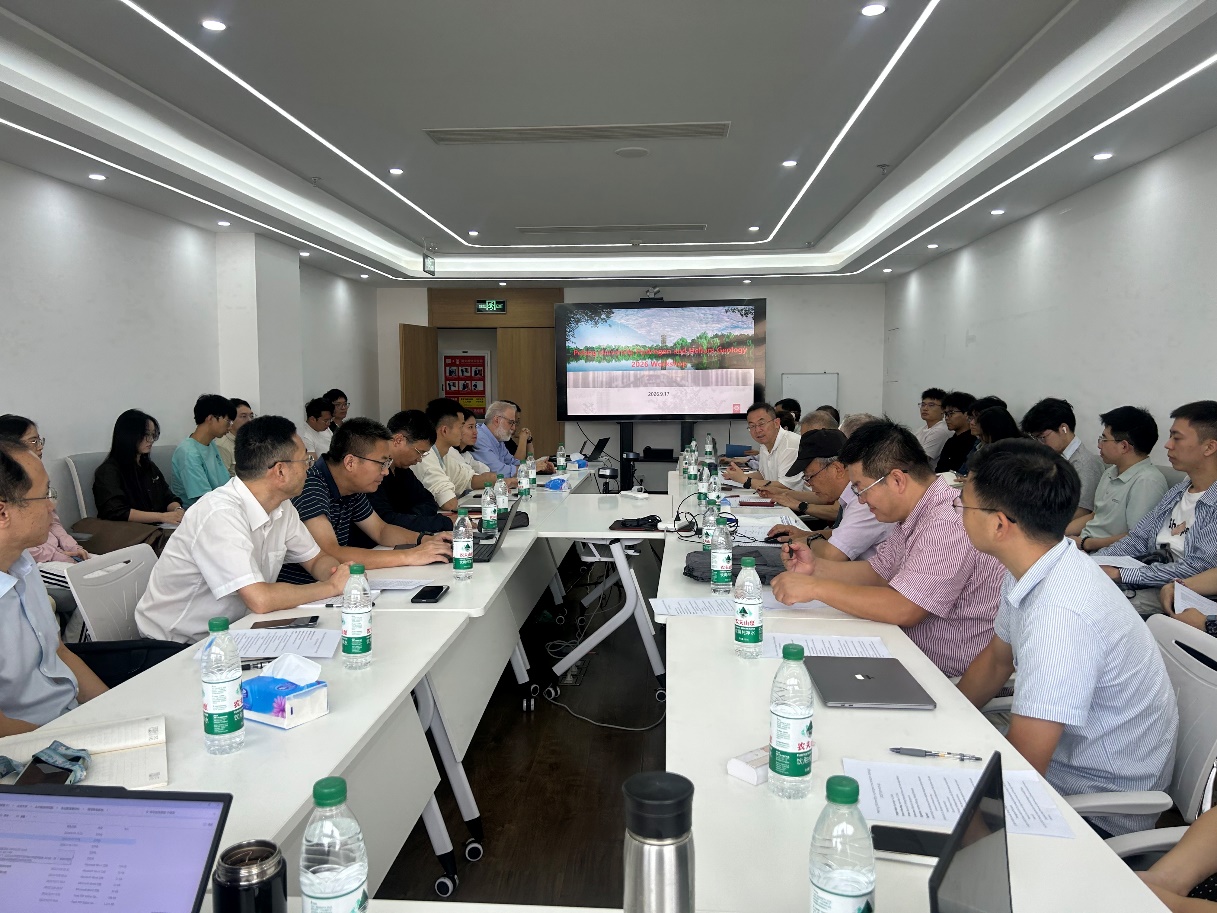
Workshop convener Quanyou Liu introduced the event
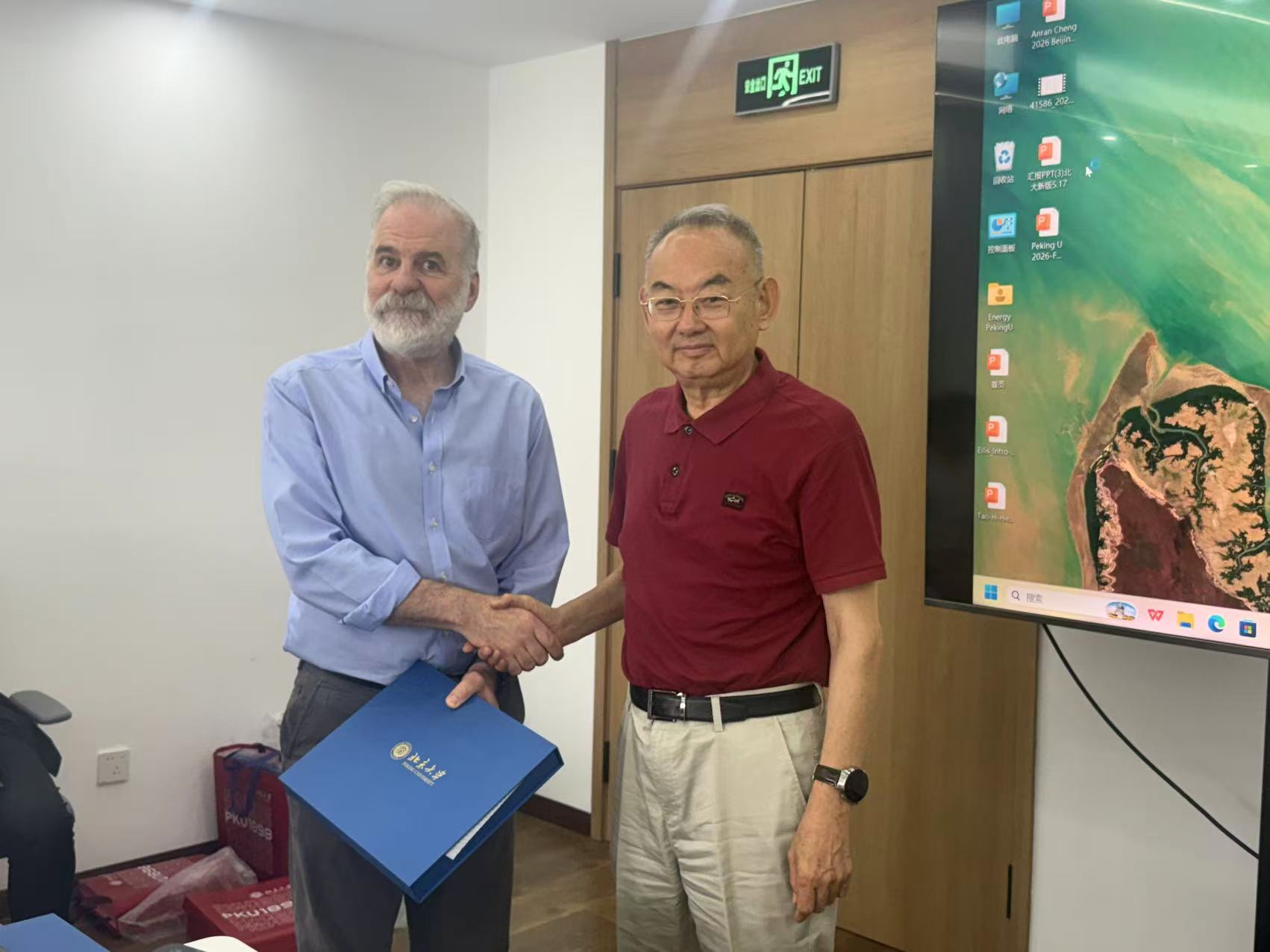
Workshop convener Zhijun Jin presented a commemorative gift to Geoffrey S. Ellis of Stanford University
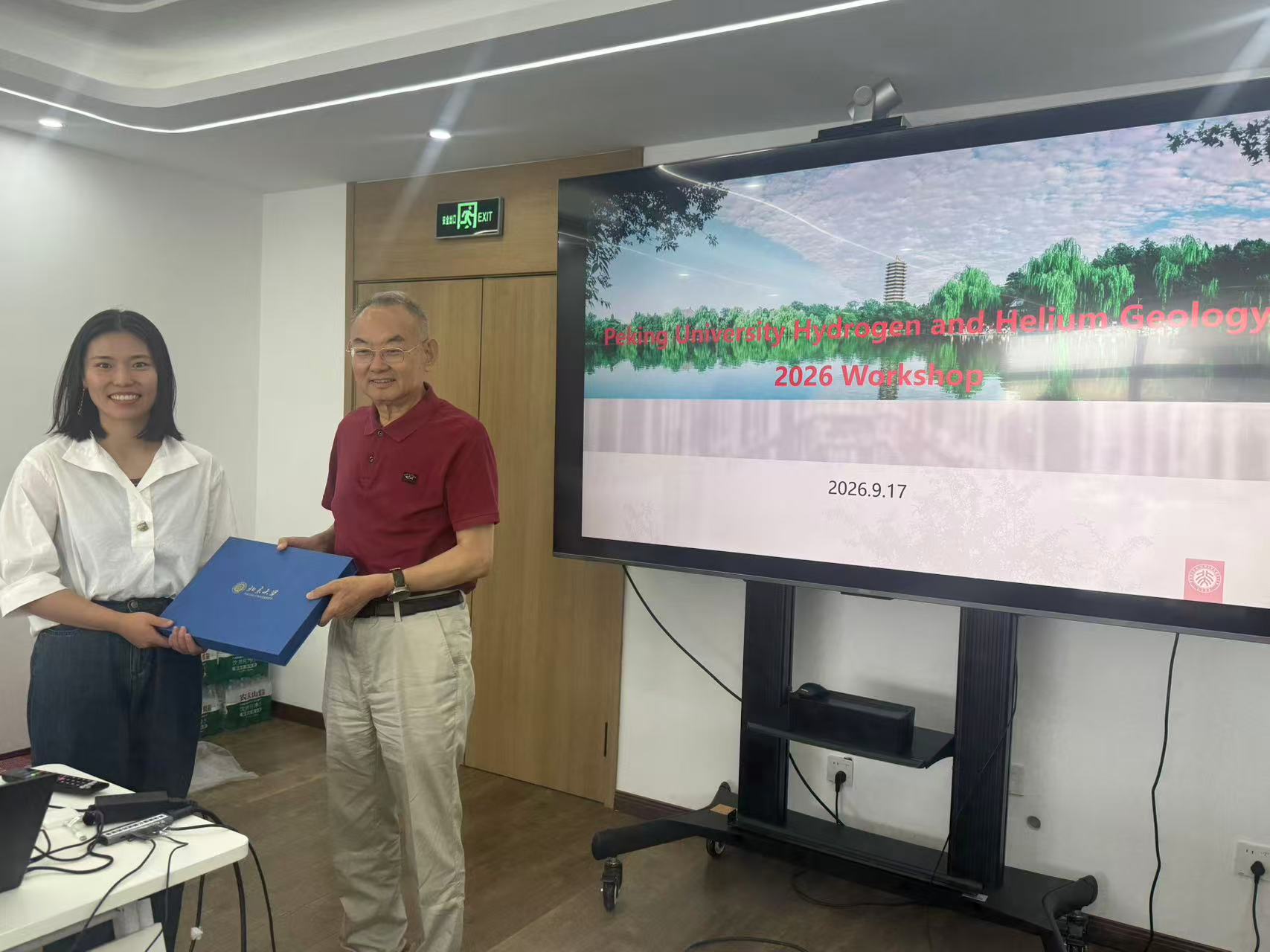
Workshop convener Zhijun Jin presented a commemorative gift to Anran Cheng
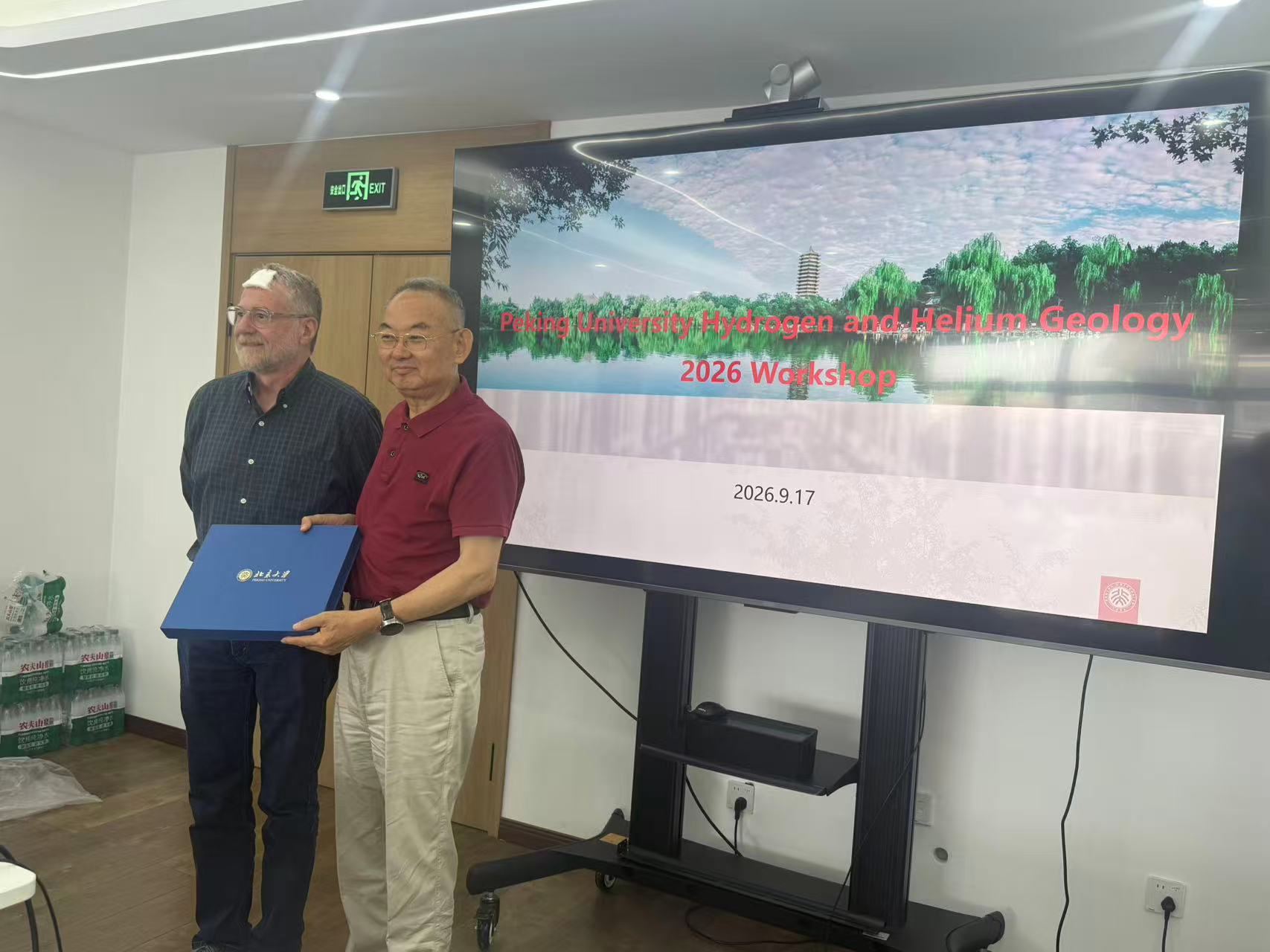
Workshop convener Zhijun Jin presented a commemorative gift to Michael Abrams of Imperial College London
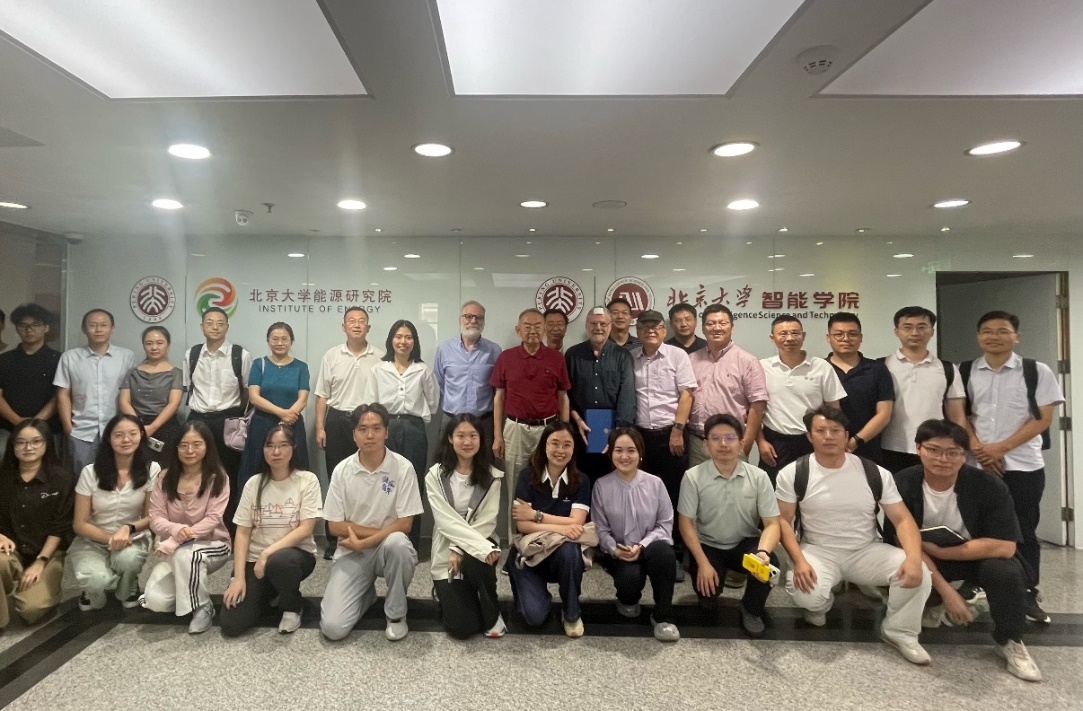
Group photo following the workshop