
Carbon capture, utilization, and storage (CCUS) is a critical technology for achieving deep emission reductions and carbon neutrality in China. By capturing CO2 from major emission intensive industries, including power generation, steel, and cement, and transporting it to suitable geological formations for utilization and storage, CCUS provides an important pathway for mitigating emissions that are difficult to eliminate through conventional decarbonization measures. However, large scale CCUS deployment requires coordinated planning of emission source locations, geological storage resources, and transportation costs. As China's energy system and industrial structure continue to evolve, both CO2 emissions and available storage capacity will change over time. Consequently, infrastructure planning based solely on the spatial distribution of sources and sinks at a single point in time may be insufficient to support long-term CCUS development.
To address this challenge, a research team led by Research Professor Kaiqiang Zhang from the School of Earth and Space Sciences and the Institute of Energy at Peking University has published a study entitled "China's dynamic layouts of carbon capture utilization and storage" in the international energy journal Applied Energy. The study develops a national scale dynamic source sink matching optimization model covering 31 provincial-level regions, 16 sedimentary basins, and five major industrial sectors, including coal fired power, gas fired power, steel, cement, and chemicals. By evaluating the deployment scale, spatial distribution, and economic performance of CCUS under eight scenarios from 2025 to 2060, the research integrates evolving CO2 emissions with expanding geological storage capacity. This approach enables CCUS infrastructure planning to address not only where facilities should be deployed, but also when they should be developed.
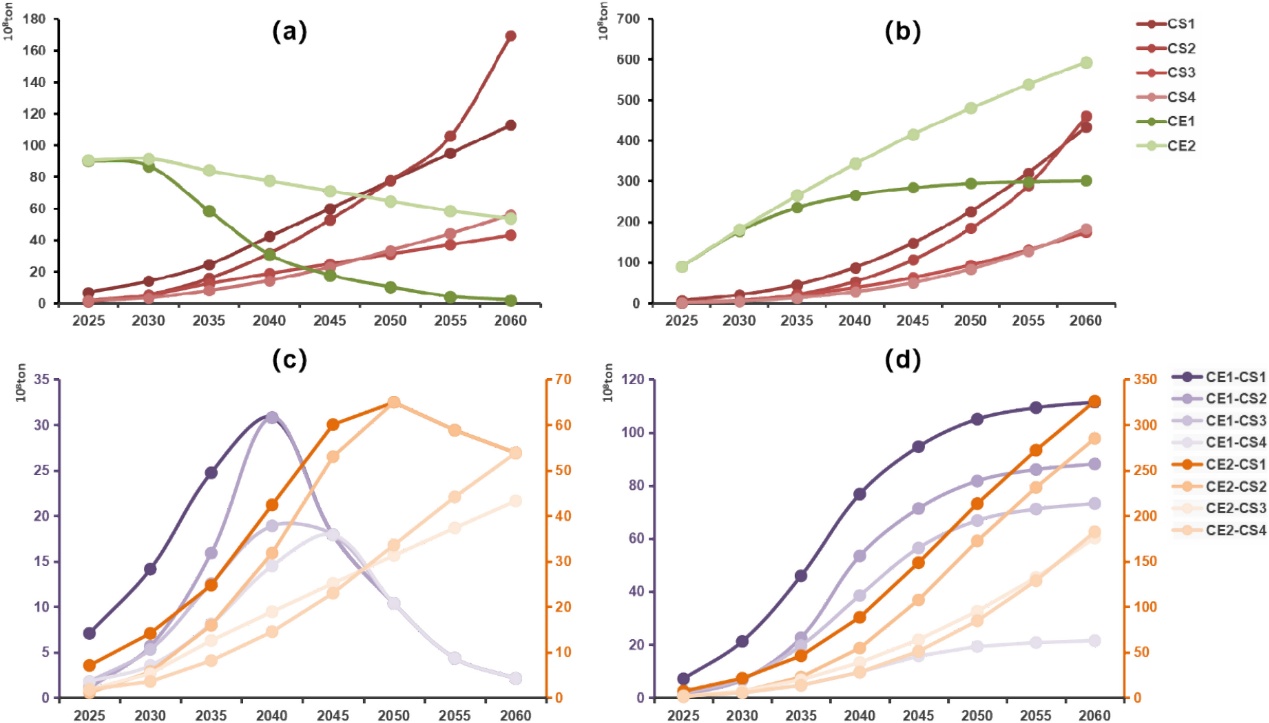
Figure 1. Two CO2 emission pathways, four storage capacity growth pathways, and the annual
and cumulative CO2 capture and storage volumes under their combined scenarios.
The results demonstrate that decarbonization pathways significantly influence both the scale and timing of CCUS deployment. Under the scenario combining accelerated emission reductions aligned with China's carbon neutrality commitments and early expansion of geological storage capacity (CE1-CS1), cumulative CO2 capture and storage reaches 11.1 billion tonnes by 2060, with annual deployment peaking in 2040. In contrast, under the scenario reflecting the continuation of stated policies with the same storage capacity growth pathway (CE2-CS1), cumulative CO2 capture and storage reaches 32.59 billion tonnes, with the peak shifting to around 2050. The higher residual emissions under the latter scenario sustain demand for CO2 capture over a longer period. In terms of spatial distribution, coal-fired power generation represents the primary source of captured CO2, while the Ordos Basin emerges as a major geological storage hub. Key source sink connections include Shanxi Province to the Ordos Basin, Hebei Province to the Bohai Bay Basin, and Xinjiang to the Tarim Basin. These connections highlight the potential for coordinated CCUS deployment between major emission-intensive regions and sedimentary basins with substantial geological storage resources.
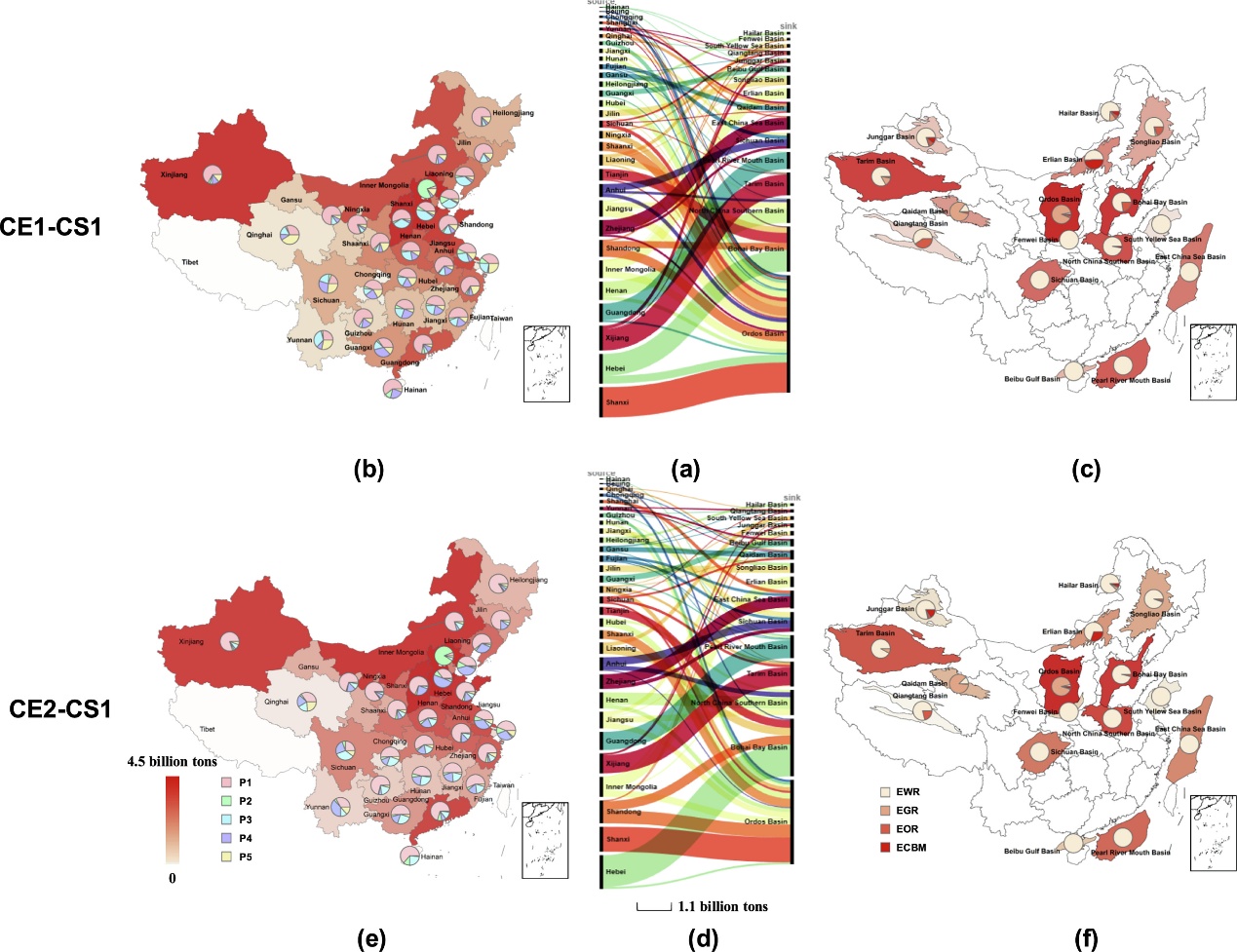
Figure 2. Provincial level CO2 emission sources and basin level geological storage sinks under two representative scenarios in China.
Further dynamic analysis reveals distinct changes in the geographical distribution of CO2 storage activities over time. Under the accelerated emission reduction pathway, storage activities become increasingly concentrated in a smaller number of sedimentary basins during the later stages of deployment. In contrast, under the stated policies pathway, a larger number of basins remain involved in CO2 storage throughout the study period. These findings suggest that CCUS infrastructure development should be aligned with the decarbonization trajectories of different industries, balancing near term deployment needs with long term infrastructure utilization. They also highlight the importance of developing shared CO2 transportation and storage infrastructure around strategically important sedimentary basins to serve multiple emission sources.
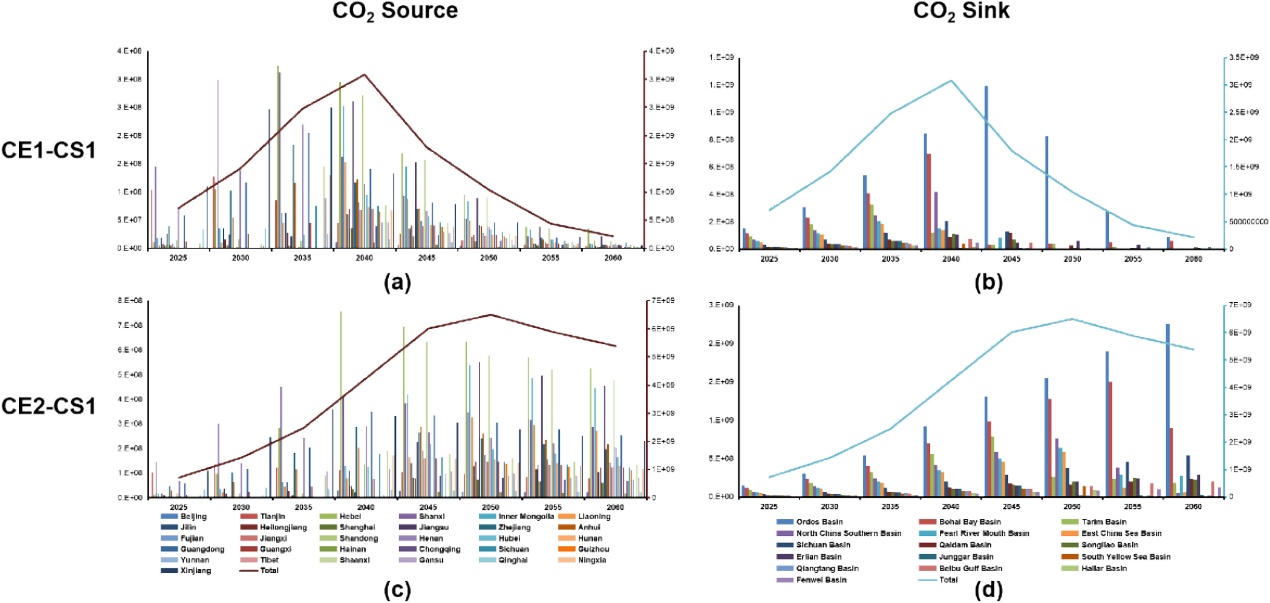
Figure 3. Dynamic changes in provincial CO2 capture volumes and
basin level CO2 storage volumes from 2025 to 2060 under two representative scenarios.
The techno-economic and policy analyses further demonstrate the economic potential of coordinated CCUS deployment. Under the techno-economic assumptions adopted in the study, the CE1-CS1 scenario, which combines emission reductions aligned with China's carbon neutrality commitments and early storage capacity expansion, could generate approximately RMB 4.85 trillion in net economic benefits. Technological advancements can reduce CO2 capture costs and reshape the relative competitiveness of different industrial sectors. Financial subsidies influence the selection of CO2 utilization and storage pathways, while the effectiveness of carbon trading varies with carbon prices and industrial characteristics. These findings provide a scientific basis for developing differentiated CCUS support policies that account for sector-specific characteristics, regional resource availability, and techno-economic performance.
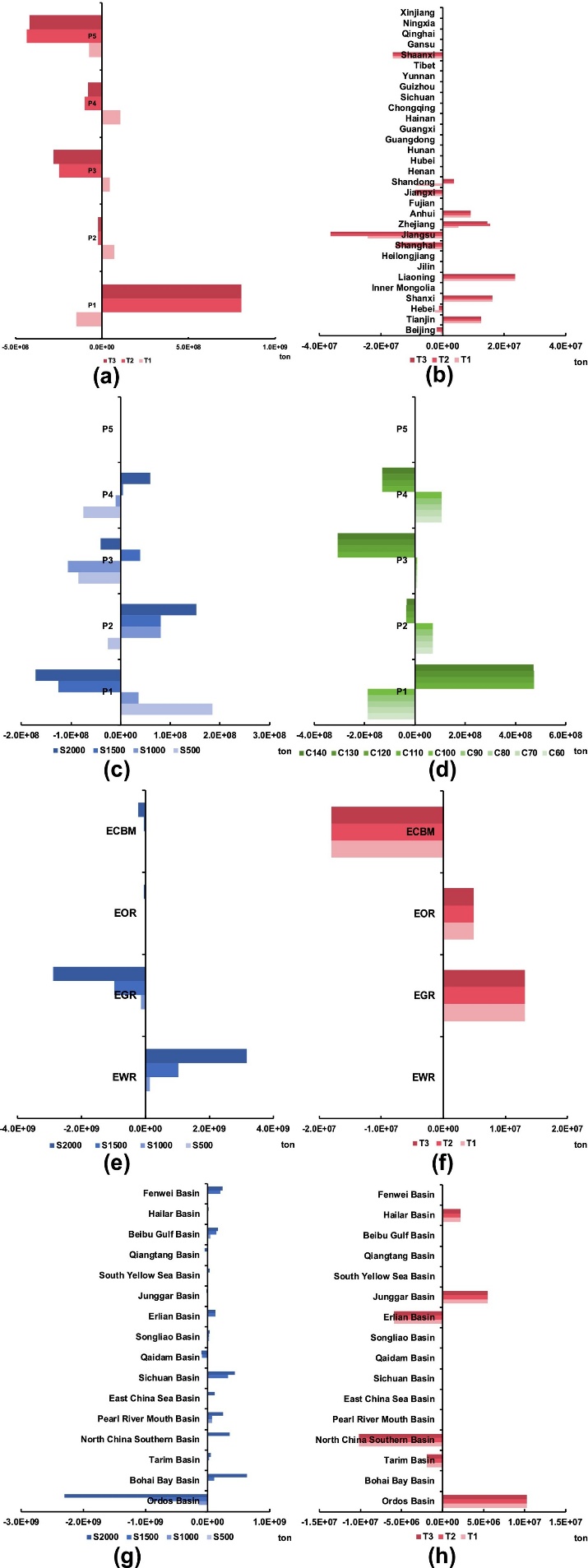
Figure 4. Effects of technological advancements, financial subsidies, and carbon trading on CCUS deployment in China.
Boyue Zheng, a postdoctoral researcher at the Institute of Energy, Peking University, and an assistant researcher at the Institute of Strategic Planning, Chinese Academy of Environmental Planning, is the first author of the paper. Research Professor Kaiqiang Zhang from the Institute of Energy, Peking University, is the sole corresponding author. Collaborating institutions include the Chinese Academy of Environmental Planning, Montanuniversität Leoben in Austria, and the University of Surrey in the United Kingdom.
This research was supported by the National Key Research and Development Program of China, the National Natural Science Foundation of China, and the Ordos Key Research and Development Program, among other funding sources.
cms_br_placeholder